
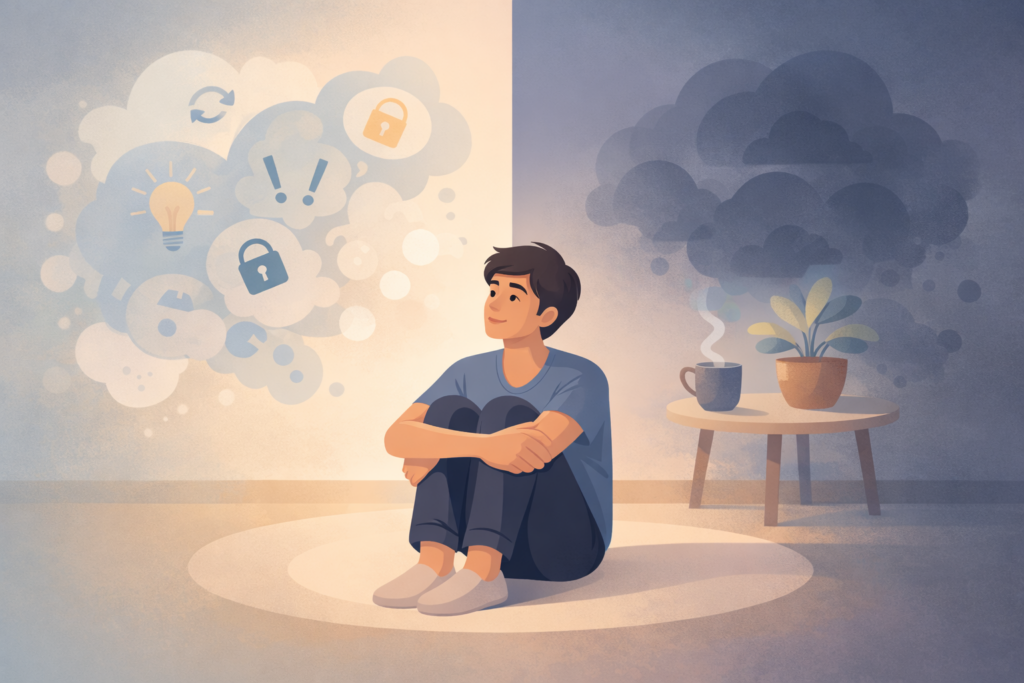
OCD and Depression: How Are They Connected?
Obsessive-Compulsive Disorder (OCD) and depression are among the most impactful mental health conditions affecting quality of life. Many individuals experience both disorders simultaneously, where intrusive thoughts, compulsive behaviors, and persistent sadness overlap, creating a challenging psychological cycle involving anxiety and emotional exhaustion.
So, how exactly are OCD and depression connected?
What You Will Find in This Article:
- What is OCD? What is depression?
- The relationship between OCD and depression
- Can depression cause OCD?
- Can OCD lead to depression?
- Similarities and differences between OCD and depression
- How to manage OCD and depression together
- When should you seek professional help?
- The Relax’s Advice
What Is OCD? What Is Depression?
What Is Obsessive-Compulsive Disorder (OCD)?
Obsessive-Compulsive Disorder (OCD) is a mental health condition characterized by unwanted, intrusive thoughts (obsessions) that lead to repetitive behaviors or mental acts (compulsions) aimed at reducing distress or anxiety.
Key characteristics of OCD include:
- Recurrent, intrusive, and distressing thoughts or urges
- Repetitive behaviors such as checking, washing, counting, or mental rituals
- Significant interference with daily life, work, or social relationships
- Obsessions and compulsions may consume hours each day
- Individuals do not find pleasure in compulsive behaviors
- OCD is often a chronic condition, though symptom severity may fluctuate
- Treatment usually includes psychotherapy (especially CBT) and medication
- Early diagnosis and treatment improve long-term outcomes
_
Treatment for obsessive-compulsive disorder (OCD) includes psychotherapy and medication.
The earlier the diagnosis and treatment begin, the better the prognosis.
What Is Depression?
Depression is a mood disorder that causes persistent feelings of sadness, emptiness, and loss of interest in activities once enjoyed.
Common features of depression include:
- Also known as Major Depressive Disorder or clinical depression
- Affects mood, thinking, behavior, and physical well-being
- May cause fatigue, sleep disturbances, and concentration difficulties
- Can make daily activities feel overwhelming or meaningless
- Is not a sign of weakness and cannot be “snapped out of”
- Often requires long-term treatment
- Most individuals improve with psychotherapy, medication, or both
- Many people experience multiple depressive episodes throughout life
Although a person may only experience depression once in their lifetime, they suffer from multiple episodes in which symptoms are present for most of the day.
________________________________________________________________________________________
What Is the Relationship Between OCD and Depression?
OCD and depression frequently occur together:
- Research suggests that 25–50% of individuals with OCD also experience depression
- In most cases, OCD symptoms appear first
- A smaller percentage experience both disorders simultaneously
- It is rare for depression to precede OCD
- Because of this pattern, depression is often considered a secondary condition resulting from OCD-related distress
________________________________________________________________________________________
Can Depression Cause OCD?
Current research does not support the idea that depression directly causes OCD.
Studies suggest OCD may develop due to:
- Genetic factors
- Differences in brain structure, particularly in frontal and subcortical regions
- Childhood trauma or chronic stress
- infections, such as streptococcal infections
________________________________________________________________________________________
Can OCD Lead to Depression?
Yes, OCD can significantly increase the risk of developing depression.
Possible reasons include:
- Emotional exhaustion from constant intrusive thoughts
- Frustration and hopelessness caused by compulsive behaviors
- Social isolation and relationship difficulties
- Reduced quality of life and sense of control
Research shows that:
- Depression often develops after OCD symptoms begin
- Around 50% of individuals with OCD experience symptom onset during childhood or adolescence
Symptoms begin to appear in approximately
50% of people with obsessive-compulsive disorder (OCD) during childhood or adolescence.
________________________________________________________________________________________
How Are OCD and Depression Similar? How Are They Different?
Similarities
OCD and depression share several overlapping features:
- Both negatively affect mood and daily functioning
- Both involve negative thought patterns
- Both may lead to social withdrawal
- Both respond well to psychotherapy and medications, especially SSRIs
- Symptoms may worsen without proper treatment
Differences
Despite similarities, there are important distinctions:
- OCD may be associated with motor or vocal tics, unlike depression
- Depression is classified as a mood disorder in the DSM-5
- OCD was previously classified as an anxiety disorder
- OCD is now categorized separately from anxiety and mood disorders
- The nature of thoughts differs: intrusive and repetitive in OCD, pervasive negative beliefs in depression
You can take a free anxiety test,
hyperactivity test, or depression test from The Relax.
How Can OCD and Depression Be Managed Together?
Both conditions can be treated effectively with an integrated approach:
- Prioritize treating OCD, as improvement often reduces depressive symptoms
- Engage in Cognitive Behavioral Therapy (CBT), particularly Exposure and Response Prevention (ERP)
- Maintain social connections and avoid isolation
- Incorporate regular physical activity
- Follow medication plans when prescribed
- Monitor for co-occurring conditions such as anxiety disorders or bipolar disorder
People with obsessive-compulsive disorder may also suffer from other disorders such as
Anxiety disorders, bipolar disorder, schizophrenia, or substance use disorder
When Should You Seek Professional Help?
You should consider consulting a mental health professional if:
- Symptoms persist for more than two weeks
- Daily functioning, work, or relationships are affected
- You experience overwhelming distress or loss of control
- There are thoughts of self-harm or hopelessness
Psychiatrists and licensed therapists can provide personalized treatment plans to help manage OCD and depression effectively.
The Relax’s Advice
If you or a loved one is struggling with OCD or depression, seeking help is a powerful first step.
At The Relax, we offer comprehensive, evidence-based mental health programs designed to support recovery, resilience, and emotional balance.
Let us help you regain control and improve your quality of life—your journey toward healing starts today.
© 2025 The Relax. All rights reserved.